

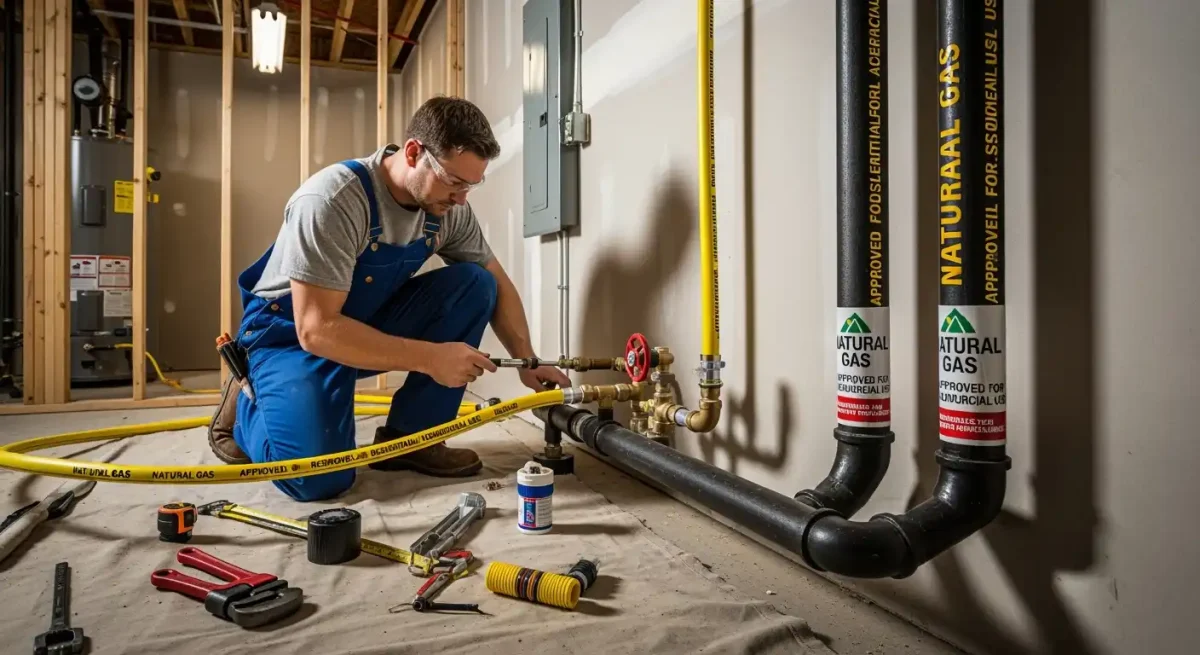
If you’re planning to add a gas stove, install a tankless water heater, connect a fireplace, or extend service to a new addition, one question comes up almost immediately: how much does gas line installation actually cost? It’s a fair question, and the honest answer is “it depends” — but that answer isn’t very useful on its own, so let’s break down exactly what drives the price up or down, what homeowners in Western North Carolina typically pay, and how to avoid surprises once the work begins.
Gas piping isn’t a project most homeowners tackle themselves, and for good reason. Even small mistakes in a gas system can lead to leaks, inefficient appliances, or serious safety hazards. Understanding the cost breakdown ahead of time helps you budget accurately and spot a fair quote when you see one.
Average Cost of Gas Line Installation
On a national level, gas line installation typically runs anywhere from $250 to $1,800 for a single appliance connection, and $1,000 to $5,000+ for whole-home or new-construction piping systems. The wide range exists because so many variables affect the final number — pipe material, distance from the gas meter, whether you’re working with natural gas or propane, and how accessible the installation area is.
For a single new appliance, such as connecting a gas range or a gas dryer, most homeowners pay between $300 and $800, assuming the line doesn’t have to travel far and there’s already a nearby gas source. Larger jobs, like running a new line to a detached garage, pool heater, or outdoor kitchen, cost more because of the added length of pipe and potential trenching work.
What Affects the Final Price
A handful of factors typically account for most of the price difference between one quote and another:
Distance from the existing gas line. The farther the new appliance is from your home’s existing gas supply, the more pipe, labor, and time the job requires. A line running 10 feet costs far less than one running 75 feet through a wall, crawlspace, or yard.
Pipe material. Black steel pipe is the traditional standard and tends to be more labor-intensive to install, while flexible corrugated stainless steel tubing (CSST) is faster to run and often reduces labor costs, though material costs can vary.
Accessibility. If the installer has to go through finished walls, concrete slabs, or tight crawlspaces, expect higher labor charges. Open, accessible routing keeps costs down.
Permits and inspections. Most municipalities, including areas around Asheville, require a permit for new gas line work, along with a pressure test and inspection before the line is approved for use. This is a safety requirement, not an upsell — skipping it isn’t an option with a licensed contractor.
Appliance type. Water heaters, furnaces, and larger BTU appliances generally require larger diameter pipe than something like a gas range, which affects material cost.
New construction vs. retrofit. Installing gas lines during new construction, before walls and floors are finished, is significantly cheaper than retrofitting a line into an already-built home.
Cost Comparison by Project Type
| Project Type | Typical Cost Range | What Affects It Most |
|---|---|---|
| Single appliance hookup (stove, dryer) | $300 – $800 | Distance from source, pipe accessibility |
| Water heater gas line | $400 – $1,200 | Pipe diameter, venting requirements |
| Outdoor fireplace or fire pit line | $600 – $2,000 | Trenching distance, underground routing |
| Whole-home new construction piping | $1,500 – $5,000+ | Number of appliances, total footage |
| Line extension to detached structure | $1,000 – $3,500 | Trenching, distance, permit requirements |
These figures are general ranges, not fixed pricing — the only way to know your exact cost is with an in-person or detailed remote estimate that accounts for your home’s specific layout.
Why Professional Installation Matters
It might be tempting to look for shortcuts on a project like this, but gas piping isn’t an area where cutting corners pays off. A poorly sealed joint or an undersized line isn’t just an inconvenience — it’s a genuine safety risk. Licensed plumbers test every connection for leaks before signing off on a job, follow local code requirements, and make sure the system is sized correctly for the appliance’s BTU demand. That last point matters more than people expect: an undersized line can cause an appliance to underperform even if there’s technically “gas flowing” to it.
Professional installation also protects your homeowner’s insurance standing. Unpermitted or DIY gas work can create issues down the line if there’s ever a claim related to fire or gas damage, since insurers often ask for permit and inspection records.
Signs You May Need New or Updated Gas Piping
A few situations tend to bring homeowners to this question in the first place:
- Adding a new gas appliance (range, dryer, water heater, or fireplace)
- Renovating a kitchen or laundry room and relocating existing appliances
- Building an addition, garage, or outdoor living space that needs gas service
- Noticing a faint gas smell, which should always be treated as an emergency, not a planning question
- Upgrading from an older, undersized line that can’t support a new high-BTU appliance
If any of these sound familiar, it’s worth getting a professional assessment rather than guessing at what’s needed.
How to Get an Accurate Quote
Because gas line installation costs vary so much project to project, the most reliable way to budget is to have a licensed plumber walk the property, or review photos and a floor plan remotely, and provide a written estimate. A good quote should include: the length of pipe required, the material being used, whether trenching or wall access is needed, permit and inspection fees, and a clear breakdown of labor versus material costs. Avoid vague, single-number quotes with no explanation behind them — transparency here is a good sign of a contractor who does things by the book.
O’Sheas Plumbing handles gas piping installation, repair, and maintenance for homes and businesses throughout the Asheville area, with every job tested for leak-free performance and installed to code.
Frequently Asked Questions
1. How long does gas line installation take?
A single appliance hookup with an accessible line usually takes a few hours. Larger jobs involving trenching or whole-home piping can take one to three days, depending on distance and complexity.
2. Do I need a permit for gas line work?
Yes, in almost all cases. Permits ensure the work is inspected and meets local safety codes, and most licensed plumbers include permit handling as part of the job.
3. Is CSST pipe better than black steel pipe?
Neither is strictly “better” — they’re suited to different situations. CSST is flexible and often faster to install in tight spaces, while black steel is a long-standing, durable option preferred for certain runs. A plumber will recommend the right one for your layout.
4. Can I convert my home from propane to natural gas, or vice versa?
Yes, but it typically requires re-fitting appliance orifices and adjusting regulators, in addition to any new piping. This should always be done by a licensed professional.
5. What should I do if I smell gas in my home?
Leave the house immediately, avoid using switches or open flames, and call your gas utility or 911 from outside. Once it’s safe, a licensed plumber should inspect the system before it’s used again.
Conclusion
Gas line installation costs depend heavily on distance, materials, accessibility, and the scope of the project, but understanding these factors ahead of time makes it much easier to budget accurately and evaluate quotes with confidence. Whether you’re adding a single appliance or piping an entire new build, working with a licensed, code-compliant plumber protects both your safety and your investment. O’Sheas Plumbing — get a free quote today for reliable, code-compliant gas piping service in Asheville and the surrounding areas.