

Water Heater Replacement
Trusted Water Heater Replacement in Swannanoa
A leaking or worn-out tank swapped for a new water heater, set to today’s code, with the old tank hauled away.
Hot Water Back and the Old Tank Gone
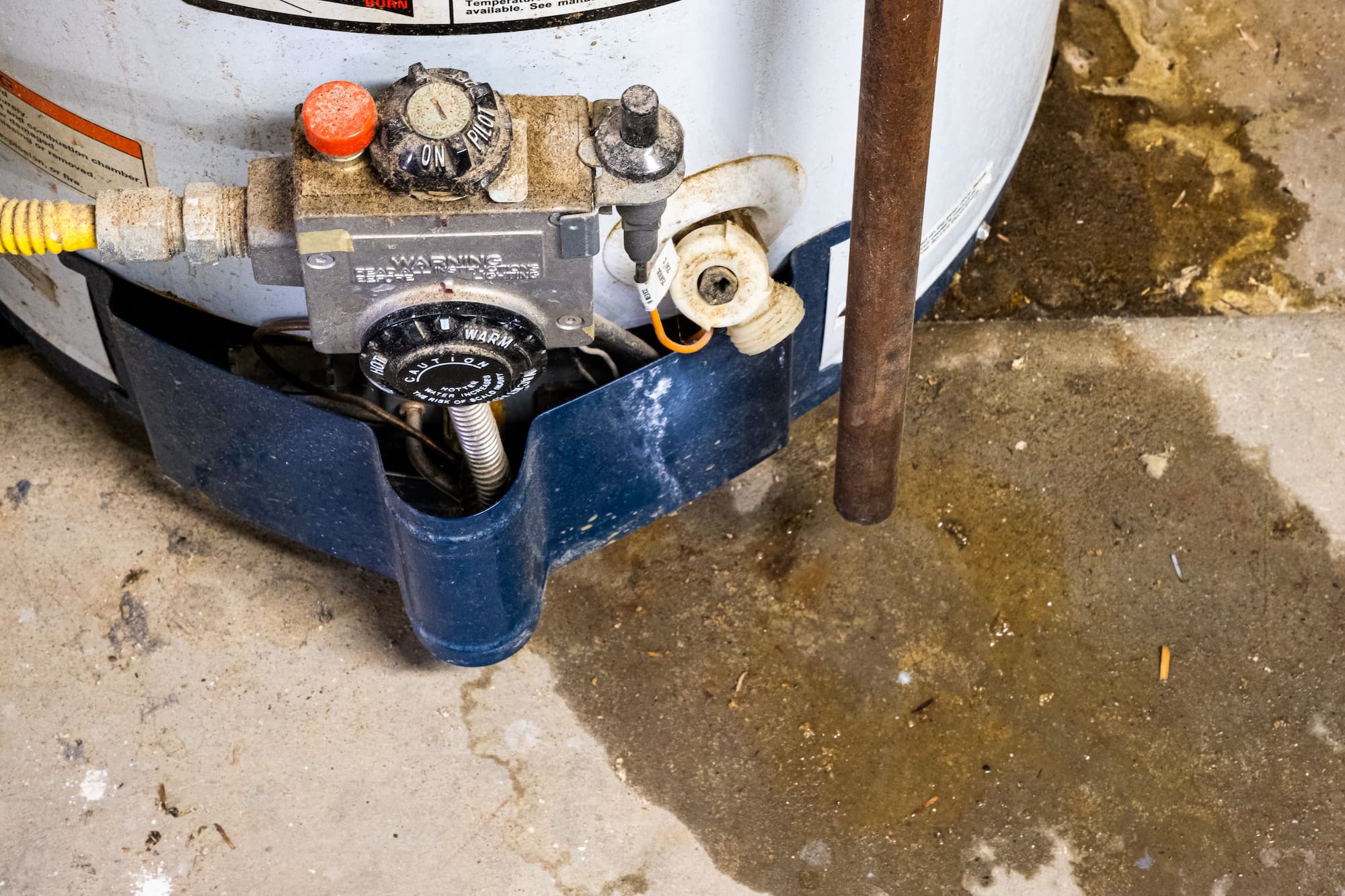
Most replacement calls start with water on the floor or a hot tap that runs cold. Water heater replacement in Swannanoa gets your hot water back, and the old tank leaves with us, since haul-away is always part of the job. We take calls 24/7, because a tank never picks a convenient hour to give out. A replacement is also the right time to bring the gas, water and vent connections around the tank up to today’s code. We replace gas, propane and electric tank water heaters for homes and businesses. It’s one part of our work as a hot water system supplier.
When a Leaking Tank Can’t Be Saved
A leaking tank or a rusted tank bottom means a new heater, and a flood-damaged water heater often does too. Once the anode rod is used up, rust starts working on the steel from the inside, where nobody can see it. By the time water shows at the base, the tank has rusted through. Rust you can see on the outside of the base usually means more rust you can’t see inside. Ian traces the water to its source first, since a fitting leak up top can run down the jacket and look like a tank leak. A loose fitting, or an electric heater with a burned-out element, usually needs water heater repair, not a new tank.
Matching Size and Fuel Type
A same-size replacement is the simplest job: a 50 gallon gas tank comes out, and another 50 gallon gas tank goes in its place. Matching the old heater is often the right call, because the gas line, vent and wiring were sized for it. An electric tank swapped for one the same size runs on the circuit that’s already there. The household also keeps the hot water it’s used to. Good reasons to change size or fuel do come up:
A bigger tank, a new fuel or a new location turns the swap into new work, and that’s where water heater installation comes in. Ian checks the gas line, wiring and venting before you pick.
Bringing an Old Install Up to Code
Plumbing codes have changed since a lot of older heaters went in. A tank that’s sat in a basement corner for years may have no drain pan, no expansion tank and a discharge pipe that stops short. The new heater goes in to the code in force today, so a replacement is often a code upgrade for the parts around the tank. Whatever the old install was missing gets added while the water and gas are already off. On a typical swap, Ian checks three parts around the tank:
The T&P relief valve’s discharge pipe runs down toward the floor, so a release can’t spray anyone standing nearby. A gas shutoff valve near the heater lets you cut the gas without hunting for the meter.
Replacing Water Heaters in Older Homes
Older in-town homes, like those in Black Mountain’s Dougherty Heights Historic District, can still have galvanized steel supply pipe between the meter and the water heater. Old threaded pipe can crack when the heater connections are turned, so Ian plans for the pipe behind the tank as well as the tank. If the galvanized run next to the heater is rusted thin, replacing that short piece during the swap saves opening it up again later.
Tank to Tankless at Replacement Time
A failed tank is a fair time to ask about a tank to tankless upgrade, but timing works against it. A tankless conversion means sizing the gas supply and planning a new vent route, and that work doesn’t fit neatly inside an emergency. If the tank’s leaking today, a same-size tank gets hot water back, and the tankless decision can wait for a calmer week. If your old tank’s still holding, that’s the window to plan a conversion, with the gas line and venting checked first.
What Happens to the Old Water Heater
Old tank disposal is part of every replacement, so a rusty cylinder doesn’t end up sitting in your yard. First the gas or power is shut off, and the tank is drained through its drain valve, which can be slow when sediment clogs it. Even empty, an old tank is heavy and awkward. It leaves the same way the new one comes in, whether that’s basement stairs, a crawl space door or a narrow closet. If the way in is steep or tight, mention it when you call, so Ian can plan the carry.
Who Shows Up to Replace Your Water Heater
The owner does. Ian is on site for every replacement, and he’s a licensed master plumber holding a Plumbing Class I Contractor license. Eric Josselyn, a South Asheville customer, has relied on Ian since he bought his home there. In his Google review, he wrote that they “replaced the water heater for me,” along with a sewage pump and a basement repipe. The work carries our satisfaction guarantee. Every other leak, drain and gas line in the house is work for the same plumber. When the old tank’s done, call (828) 348-5820.
Did you know?
Running water reached the White House in 1833. Its new bathing room had a cold bath, a shower and a hot bath heated by coal fires under big copper boilers. A hot soak didn’t happen until somebody stoked the fire.
FAQs About Water Heater Replacement in Swannanoa
Most of these come up once you know the old tank is done and you’re picking what goes in its place. Don’t see what you’re looking for? Ask a question here.
Yes, if the house has natural gas service or a propane tank. A gas heater needs a gas line, a shutoff valve and a vent to the outside, and an electric tank had none of those. Because the fuel changes, it’s handled as new work instead of a like-for-like swap.
It does when a backflow preventer, check valve or similar device sits on your water supply line. Without one, heated water has nowhere to go, and pressure climbs until the T&P relief valve opens. Ian checks the supply line for those devices before the new tank goes in.
It needs one in an attic, above a finished floor or over a room below. The pan drains to a safe spot, so a slow leak shows up before it soaks a ceiling.
Usually, when it’s the same size and fuel. Newer tanks can be a little taller or wider than older ones of the same capacity, so Ian measures the space, doorways and stairs first. Moving the heater to a new spot counts as new work and changes what North Carolina’s permit exemption covers. If it has to move, Ian talks it through with you before anything’s ordered.
Not always. A sound vent of the right size can stay, while rusted, loose or undersized vent pipe gets replaced, since it carries exhaust out of the house. Electric tanks don’t have a vent at all. A gas heater sharing a flue with an older furnace gets a closer look, since changing one appliance can affect how the other drafts.
Often, yes, once an old tank shows rust at the base or around its fittings. Planning it lets you choose size and fuel on your own schedule, and it keeps a failure from soaking a floor. A tank in an attic or above a finished room makes the strongest case.
Not instantly. The new tank fills with cold water first, then has to heat the whole tank. A gas or propane tank usually catches up sooner than an electric one. Before he leaves, Ian checks every connection for leaks and makes sure the heater is firing or heating.
Yes. Call (828) 348-5820 any day of the week, and Sarah will answer, even on a holiday. Mention what you’re seeing and the heater’s fuel.
Always ready for tough problems

Do something nice for your pipes
Quick Links
Services
Please Review Us
We sure could use your help letting Swannanoa know how good we are.
Copyright © 2026 O’Sheas Plumbing · Ian O’Shea, Licensed Plumber NC Plumbing Class I Contractor L.34576 · 150 Old Lytle Cove Rd, Swannanoa, NC 28778