

Toilet Services
Professional Toilet Services in Swannanoa
Running, rocking and leaking toilets repaired, stubborn clogs cleared and new toilets set on a fresh seal.
At the Toilet, or Further Down the Line?
Skip this row. No change needed. like a running tank, a rocking bowl or a leak at the base. On hilly lots, a lower-level bathroom often sits below the sewer line, so its toilet flushes into a sewage pump basin first. If a downstairs toilet on a pump backs up while the rest of the house drains fine, the pump needs checking along with the toilet. O’Sheas Plumbing handles toilet repair and toilet installation, and that includes clogs that keep coming back. Toilets are part of our everyday plumbing services, and Ian O’Shea is on site for every visit.
Running Toilets and Phantom Flushes
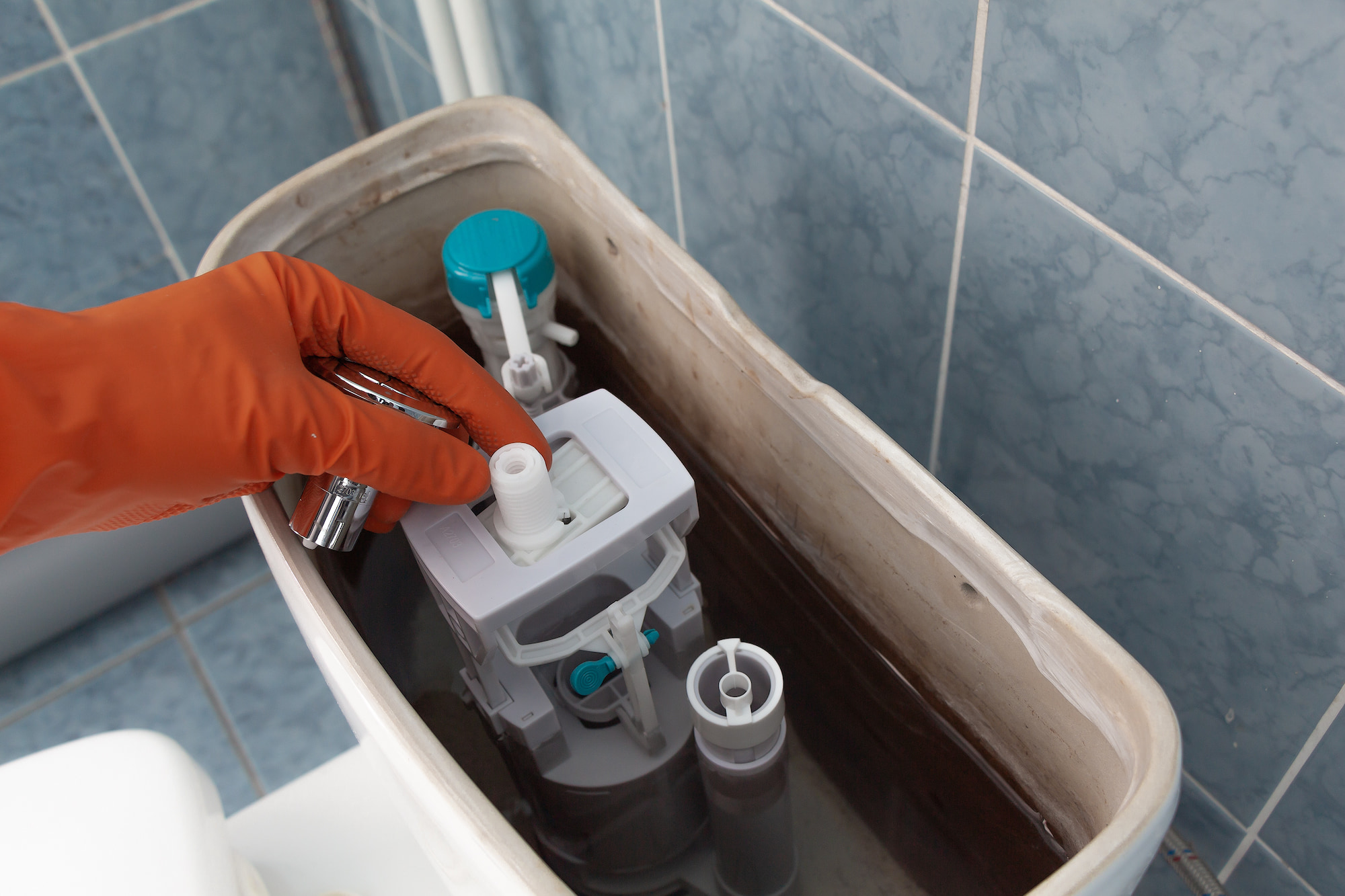
A toilet that keeps running is either losing water past the flapper or has a fill valve that won’t shut off. Listen once the tank has refilled. A steady hiss usually points to the fill valve, the upright valve that refills the tank. Older toilets have a ballcock instead, a valve worked by a float on a long arm. A phantom flush is different: the tank refills for a few seconds on its own, with nobody near the bathroom. That’s water seeping from the tank into the bowl until the fill valve kicks on to top it up. You can check for it with a few drops of food coloring in the tank. If color shows up in the bowl without a flush, the flapper or the flush valve seat under it is leaking. A flapper is a small rubber part, and a warped one can leak all day without making a sound. We replace whatever has worn, adjust the chain and set the water level to the line on the overflow tube.
Weak Flushes and Clogs That Keep Coming Back
One clog is usually bad luck. A toilet that clogs every week usually has a problem in the trap, the tank or the line past it. Wipes cause plenty of trouble, even the ones sold as flushable, because they don’t break apart the way toilet paper does. For a clog a plunger won’t move, we work a toilet auger through the bowl’s trap, where a plunger can’t reach. When the toilet backs up along with a tub or a floor drain, the clog is in the drain line past the toilet. A toilet that’s overflowing and won’t stop is an emergency, so close the shutoff valve behind it and call (828) 348-5820. Sarah answers that line at night and on weekends too. Weak or double flushes usually trace back to:
We check the tank side first, since those fixes are quick, then move on to the trap and the drain.
Leaks at the Base and a Failed Wax Ring
The wax ring is the seal between the outlet under the bowl and the flange in the floor, and it only seals once. When a toilet rocks, even a little, the wax gets pushed out of shape and the seal opens up. Water then escapes with each flush, so a floor that looks dry between uses can still be leaking. The signs often show up somewhere else first. Look for a stain on the ceiling below, a soft spot near the bowl or a faint sewer smell. Snugging the closet bolts can stop the rocking for a while, but cranking them down can crack the porcelain base. A toilet that rocks needs to come up, because shims and tighter bolts only hide a seal that’s already broken. Left alone, a slow leak at the base leads to subfloor rot, and the floor around the flange goes soft.
Toilet Flange Repairs on Old Floors
With the toilet pulled, the toilet flange is in plain view, and what shape it’s in sets the rest of the repair. A plastic flange with a snapped bolt slot can often take a repair ring over it. A flange left sitting below a new tile floor needs a spacer, or the wax can’t reach it. In Asheville’s Chestnut Hill, developed in the late 1800s and early 1900s, houses often still have a cast iron flange on a cast iron drain. Cast iron rusts, and a flange that has rusted thin won’t hold the closet bolts. A rusted flange gets repaired or replaced while the toilet is off, since it holds the toilet for years after. Where subfloor rot has spread around the opening, the soft wood has to be found and dealt with before the toilet goes back down.
When Toilet Repair Stops Making Sense
Some damage isn’t worth the repair. A hairline crack in a tank or bowl tends to spread, and a patch on porcelain rarely holds for long. Porcelain doesn’t heal, so a crack that’s spreading means a new toilet. We check the angle stop and supply line on every call, too. The angle stop is the small shutoff valve on the wall behind the toilet, and the supply line runs from it to the tank. A supply line with a bulge, or rust at either nut, gets replaced before it bursts. Ian O’Shea’s license is Plumbing Class I Contractor, L.34576. If the trouble turns out to be inside a wall or under the floor, that license lets the same plumber follow it there. A new toilet usually makes more sense when you see:
Repair or replace, the work comes with our satisfaction guarantee.
Toilet Installation and Picking a New One
A toilet installation starts with the old toilet out and the flange checked. Then a new wax ring and new closet bolts go in. The new toilet is set level, bolted down, connected to the supply line and flushed several times while we watch the base. Bought a toilet already? We’ll install it, and the old one leaves with us. Federal law has capped new residential toilets at 1.6 gallons per flush since January 1, 1994. Byrd Road Townhomes in Black Mountain went up in 2008, so the toilets first set there already met that limit, and swapping one saves little water. A comfort height toilet sits taller, closer to the height of a chair, which is easier on knees and backs. A dual flush model has two buttons, a lighter flush for liquid and a full one for solids. Measure from the finished wall to the center of the closet bolts before you shop, because that rough-in sets which toilets will fit. To have one set, or to fix the one you have, call (828) 348-5820.
Did you know?
Queen Elizabeth I’s godson designed a flushing toilet in 1596. Sir John Harington described it in a book called The Metamorphosis of Ajax, and it used 7.5 gallons a flush. That’s nearly five times the 1.6-gallon federal limit for a new toilet today.
FAQs About Toilet Services in Swannanoa
A toilet tends to act up at the worst possible time, so a few of these answers cover what’s safe to try before anyone arrives. Don’t see what you’re looking for? Ask a question here.
Yes, and it’s easy to miss. A worn flapper lets water slip into the bowl and down the drain all day and all night. If your bill climbs with no new use, a silent flapper leak is the first thing to check.
It’s better to skip it. When the chemical can’t get through the clog, it sits in the bowl, and it can splash on you or on whoever plunges next. Try a flange plunger first, the kind with a rubber sleeve that fits into the drain opening. If that doesn’t move it, Ian can clear it with an auger.
Cold water fills the tank, and humid summer air condenses on the cold porcelain. The drips can puddle on the floor and look a lot like a leak at the base. Dry the tank and the floor, then watch where the water comes back first. An insulated tank liner can cut down on the sweating.
Pour a bucket of water straight into the bowl in one quick motion, and the toilet will flush on its own. Filling the tank and using the handle works too, but it takes more water. When service comes back, open the angle stop slowly and let the tank refill before the next flush.
Every new toilet gets a new wax ring, no exceptions. The flange is a judgment call. If it’s solid, level with the floor and holding its bolts, it stays. If it’s cracked, rusted or sitting too low, Ian repairs or replaces it before the new toilet goes down.
Usually, though it’s more drain work than toilet work. The drain has to be rerouted under the floor and tied into the drain and vent lines at the right slope. Over a crawl space, that work can often be reached from below. On a slab, the floor has to be opened, so it becomes part of a larger remodel.
Sometimes. The EPA says older toilets can use as much as 6 gallons per flush, so a busy bathroom adds up. If it also needs repeat repairs, that tips the decision further. If yours flushes well and nothing’s leaking, there’s no rush.
A slow refill usually means the fill valve is partly blocked or worn. Grit stirred up by a water main repair or an outage can catch in the valve’s small screen. Low water pressure slows it too, and that shows up at every faucet in the house. Ian cleans or replaces the fill valve and makes sure the angle stop is fully open.
Always ready for tough problems

Do something nice for your pipes
Quick Links
Services
Please Review Us
We sure could use your help letting Swannanoa know how good we are.
Copyright © 2026 O’Sheas Plumbing · Ian O’Shea, Licensed Plumber NC Plumbing Class I Contractor L.34576 · 150 Old Lytle Cove Rd, Swannanoa, NC 28778