

Water Heater Maintenance
Professional Water Heater Maintenance in Swannanoa
Tank flushing, tankless descaling, anode checks and valve tests for Swannanoa homes, with Ian on site.
Water Heater Upkeep From a Licensed Owner
Ian O’Shea is a licensed master plumber, and water heater maintenance in Swannanoa is the visit you book while the heater still works. His time in the trade goes back to 2003. You pick the day, and nothing has to be fixed in a hurry. We maintain tank heaters on gas, propane or electricity, plus tankless units. If yours has already quit, start with water heater repair or tankless water heater repair instead. Upkeep belongs with our installs and repairs as a hot water system supplier, and Ian’s a full-service plumber for the rest of the house. What a yearly visit usually includes:
Tank Flushing and Sediment Removal
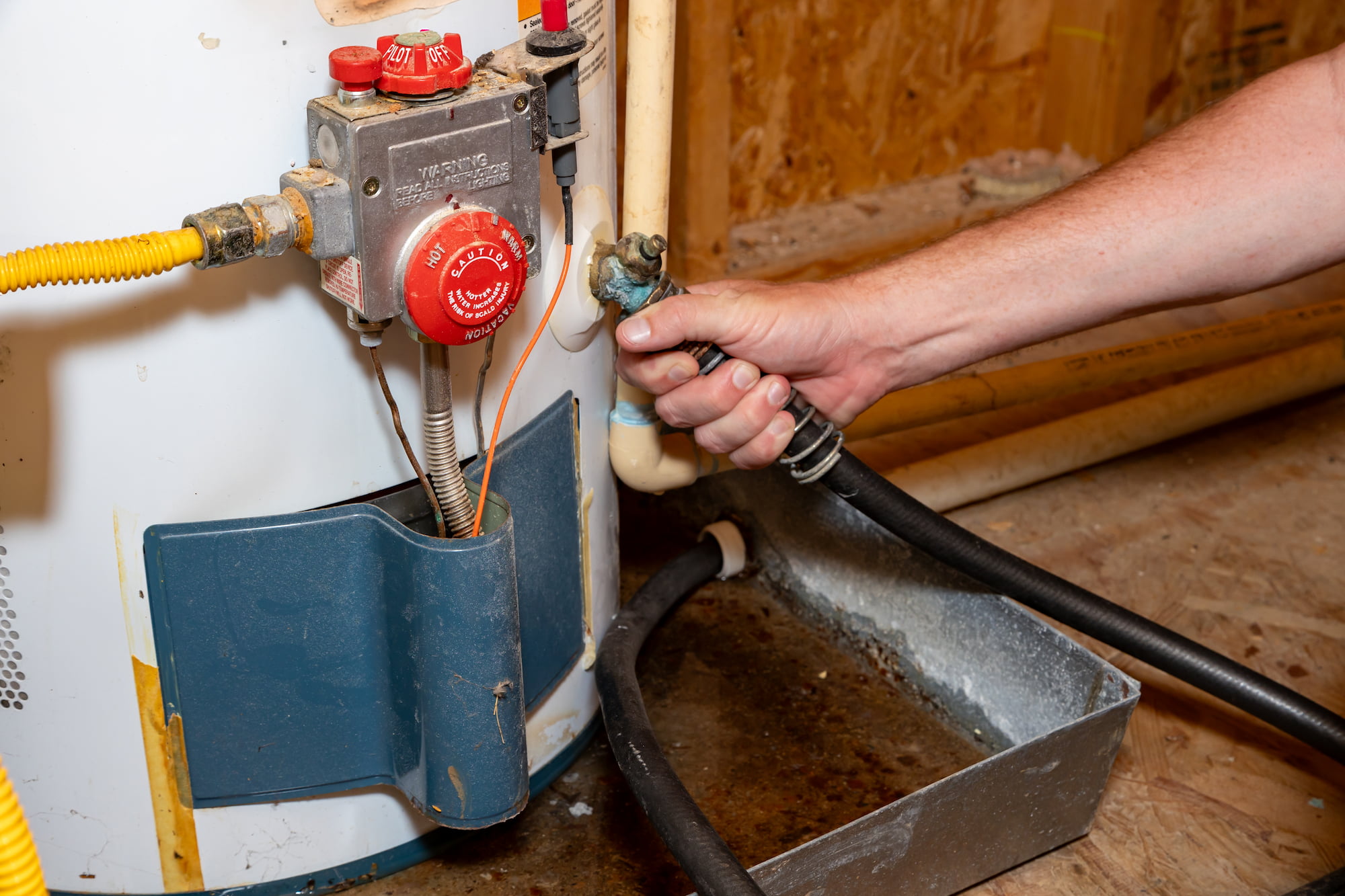
Water heater flushing clears out sediment, the minerals and grit that settle from heated water onto the bottom of a tank. On a gas tank, that layer sits between the burner flame and the water. On an electric tank, it can bury the lower heating element. Ian starts by shutting off the gas or power and closing the cold supply valve above the tank. He connects a hose to the drain valve and runs it to a floor drain or outdoors. Then he opens a hot tap in the house so air can get in. Short bursts of cold water stir up what’s packed on the bottom, and the hose keeps running until the water comes out clear. Factory drain valves are often plastic, and sediment can plug one halfway through a flush. When that happens, Ian can fit a full-port brass drain valve, which makes every later flush quicker. The tank refills with a hot tap open until the air stops sputtering, and only then does the gas or power come back on.
Plumbing Services in Swannanoa
Tank or tankless, and when was it last serviced? Ian sets the visit around your week at (828) 348-5820.
Tankless Descaling and Flushing
Tankless descaling clears scale, the mineral coating that can build up inside a tankless unit’s heat exchanger. Scale slows the transfer of heat, so the burner or elements work longer for the same hot water. The job starts at the isolation valve kit, the pair of service valves under the heater with a small port on each. Ian closes both, hooks hoses to the ports and runs a descaling solution through the heat exchanger with a small pump. Then he flushes it with clean water and opens the valves again. A tankless heater installed without an isolation valve kit can’t be serviced this way, and adding one makes each future descale simpler. He also pulls the inlet filter, rinses out whatever it has caught and seats it again. On gas units, the vent run gets a look, along with the condensate line on condensing models.
Anode Rod Inspection and Replacement
Checking an anode rod means getting it out of the tank. Ian shuts off the water, opens a hot tap to relieve pressure and breaks loose the hex head on top of the heater. That fitting is often seized and can take a long breaker bar. A rod with life left still has metal along its length. A spent one is worn down to its steel core wire in spots, or crusted and swollen. Low ceilings are a common snag, and a segmented anode that bends at its joints can go in where a solid rod won’t fit. Some tanks hide the anode inside the hot outlet fitting instead of a port of its own, so Ian checks which setup yours has first. Replacement rods come in two common metals, a magnesium anode and an aluminum anode, and the right one depends on your water. The Royal Pines Village townhomes in Arden went up between 2005 and 2019. A heater original to one of those homes may never have had its anode pulled, so ask for that check.
T&P Valve, Expansion Tank and Flue Checks
A T&P relief valve test takes a bucket and a few seconds. With the bucket under the discharge pipe, Ian lifts the test lever. Hot water should rush out, and the valve should snap shut and stay dry once it’s let go. A valve that won’t open, or one that keeps running afterward, gets replaced. Next comes expansion tank pressure, if the house has one. Ian reads the air charge at the valve on the end of the tank with a gauge. That charge should match your home’s water pressure, and a tank that spits water at its air valve has a failed bladder. On gas and propane heaters, the visit also covers these:
A yellow flame or exhaust spilling at the draft hood turns the visit into repair work. That work goes on the burner or the vent, not the tank.
Storm Grit Left in the Tank
Helene churned sediment and clay into the North Fork Reservoir, which feeds the North Fork Water Treatment Plant and most of Asheville’s city water. When that water first came back under a boil water notice, officials warned it would carry a lot of sediment. They suggested closing the valve to the water heater. If yours stayed open, North Fork Reservoir sediment can still be sitting on the bottom of the tank until it’s flushed out.
That’s the grit that makes a tank rumble, and it can bury the lower element on an electric heater. If your hot water runs gritty or discolored after a big storm, book a flush.
Setting a Schedule That Fits Your Water
Annual service is a good starting point for homes on City of Asheville water. That water tests soft, so scale tends to build slowly in tanks and tankless units alike. Sediment still arrives with it, especially after storms. A large household, a heater that runs hard all day or a tankless unit that’s never been descaled may need a look sooner. Ian sets your next visit by what he finds in the tank or the inlet filter, instead of by a fixed date. The license behind this work is Ian’s own, Plumbing Class I Contractor L.34576. Write each service date on a tag tied to the cold water line, so there’s a record for the next visit.
Service Areas
You won’t find a better plumber in Swannanoa
Call or text (828) 348-5820, day or night.
Did you know?
Swannanoa’s public water is soft. The USGS calls water soft at 60 mg/L of hardness or less. The City of Asheville water serving those homes tested at just 5.52 ppm in 2025. That’s under a tenth of the line.
FAQs About Water Heater Maintenance in Swannanoa
Upkeep raises its own questions, mostly about what you can do between visits. Don’t see what you’re looking for? Ask a question here.
You can, if you’re comfortable with scalding water, gas controls and a drain valve that might not cooperate. Let the tank cool first and keep clear of the hose end. Older plastic drain valves sometimes crack or won’t close once sediment’s in them, and then the tank won’t stop draining. On an electric tank, switching the power on before it’s refilled can ruin an element. If that’s more than you want to take on, Ian can handle it.
It can uncover one. Years of hardened sediment sometimes cover a weak spot in the tank bottom, and stirring it loose lets a seep show up. The drain valve on an old tank may also refuse to close. Ian looks over the tank before he starts and tells you whether a flush still makes sense.
It still needs a yearly look, even though soft water slows scale. The inlet filter can still catch grit, and storm sediment shows up no matter how soft the water is. Ian checks inside on each visit and descales when scale is there.
A few drops while it seats are normal, but a steady drip means something’s caught. Grit or scale can lodge on the valve seat when it opens, and lifting the lever once more sometimes clears it. If the drip keeps going, the valve gets replaced. A valve that drips on its own, with no test, points to a pressure or temperature problem and is a repair call.
That turns on whether it’s a tank flush, a tankless descale or both. A tankless unit without an isolation valve kit takes more work the first time, since the valves get added. A worn anode rod, a plugged plastic drain valve or a relief valve that won’t reseat adds a part. Tight access in a crawl space or attic slows the work.
Tap it. A good tank sounds hollow on the air side and solid on the water side, while a failed one sounds solid all the way up. Pressing the air valve on the end is another clue, because water instead of air means the bladder inside has torn. A failed expansion tank lets pressure climb each time the heater runs, and that works the T&P relief valve harder.
Mostly, yes. Electric tanks still collect sediment, carry an anode rod and have a T&P relief valve, so flushing and those checks apply. They skip the burner, flue and gas connection checks. In their place, Ian looks at the heating elements, since sediment can bury the lower one and wear it out early.
Clear a path to the heater and a little room around it. Let us know where the nearest floor drain or outside door is, since the flush water needs somewhere to go. If you know when the heater went in or was last serviced, have that handy. Pets are best kept away from the hose and the hot water.
Always ready for tough problems

Do something nice for your pipes
Quick Links
Services
Please Review Us
We sure could use your help letting Swannanoa know how good we are.
Copyright © 2026 O’Sheas Plumbing · Ian O’Shea, Licensed Plumber NC Plumbing Class I Contractor L.34576 · 150 Old Lytle Cove Rd, Swannanoa, NC 28778